




Description
Anarkali and Indian Markets: A Journey of Heritage, Style, and Commerce
1. Introduction
Indian fashion is a rich tapestry woven with traditions, stories, and evolving aesthetics. Among the many garments that hold a special place in the cultural wardrobe, the Anarkali stands out as one of the most iconic and enduring styles. With roots that trace back to the Mughal era, this regal outfit has traveled across centuries and social classes, consistently reinventing itself while retaining its timeless charm.
In the context of the Indian market, this garment is more than just clothing. It is a product of cultural expression, economic value, and fashion versatility. It has not only influenced how people dress for special occasions but has also become a key product for textile artisans, manufacturers, retailers, and designers.
2. Historical Roots of the Anarkali
The origins of the Anarkali lie in the Mughal courts, where royalty and nobility favored opulent, flowing garments. The name itself is believed to be derived from a legendary courtesan named Anarkali, known for her beauty and grace. The silhouette features a long, frock-style top that flares out from the waist, often worn over fitted bottoms such as churidars or leggings. Over time, it has become a symbol of grace and femininity.
This garment was originally crafted in luxurious materials like silk and brocade, adorned with fine embroidery and delicate embellishments. From being a royal outfit to a modern-day favorite, its journey reflects the changing tastes and societal structures of India.
3. Evolution Over the Years
Throughout history, the Anarkali has undergone several transformations. In earlier decades, it was mostly limited to formal and ceremonial attire. However, as fashion evolved in India, it began appearing in more casual, semi-formal, and even office-wear collections. Designers introduced variations in lengths, cuts, and fabrics, making it adaptable for all age groups and body types.
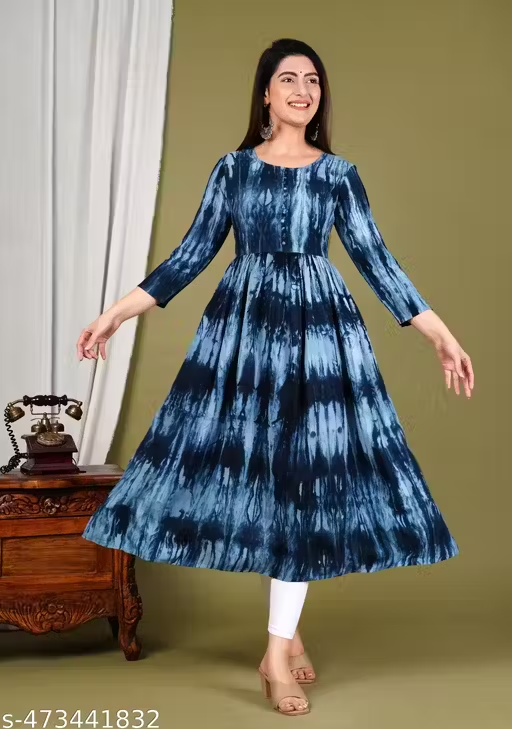
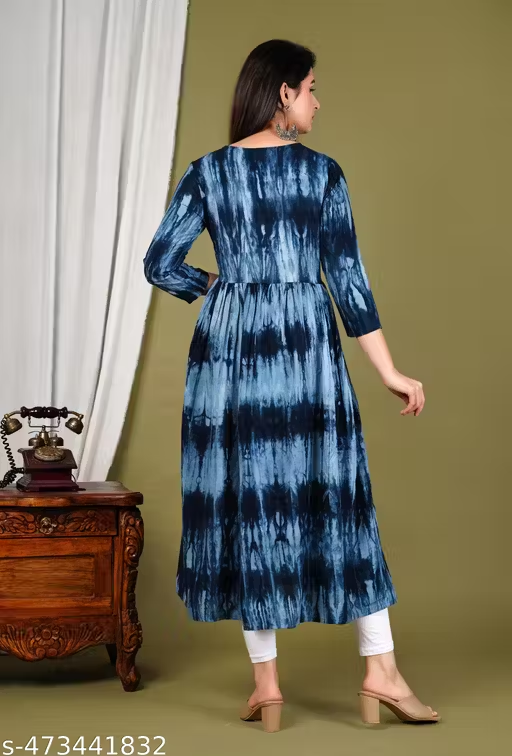
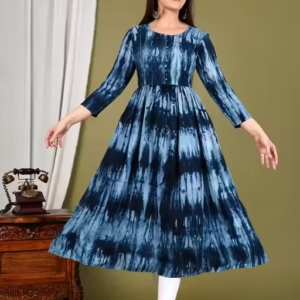
The modern-day version comes in a wide range of styles—from floor-length gowns to knee-length versions. It can be sleeveless, full-sleeved, or feature bell sleeves, cape designs, or even jackets. Such diversity allows the garment to suit every occasion, whether it’s a wedding, religious celebration, party, or festival.
4. Popularity in Indian Markets
In the Indian market, the Anarkali holds a prime position in the ethnic wear segment. It appeals to customers from urban metros as well as smaller towns, bridging the gap between luxury and accessibility. Fashion retailers stock various styles in different price ranges, targeting both high-end consumers and budget-conscious buyers.
The demand increases significantly during festival seasons such as Diwali, Eid, and Navratri, as well as during wedding months. During these periods, footfalls in physical stores and online searches see a noticeable spike, indicating its strong influence on consumer behavior.
Furthermore, the Anarkali is not limited by age. Young women prefer lightweight, printed versions for daywear, while older customers often choose richly embroidered or traditional styles for family events or cultural functions.
5. Regional Variations and Influence
India’s vast diversity allows for regional variations of the Anarkali to flourish. In North India, particularly in Delhi, Punjab, and Uttar Pradesh, heavy, embroidered versions are extremely popular for weddings and religious ceremonies. In the South, silk versions with temple-inspired motifs find favor, especially during festivals and classical performances.
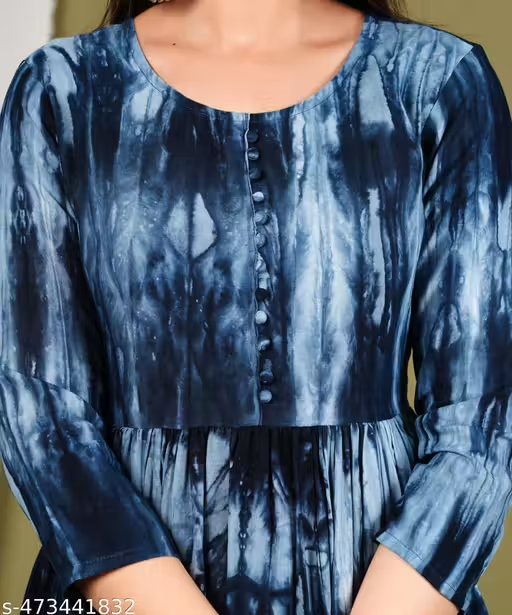
Eastern regions like Bengal prefer soft fabrics and handloom versions, while Western states like Gujarat and Rajasthan incorporate mirror work, tie-dye techniques, and bold prints. These adaptations are made possible through collaboration with local artisans, weaving the garment into the broader cultural narrative of the Indian market.
6. Materials and Craftsmanship
The beauty of the Anarkali also lies in its adaptability to different fabrics and artistic styles. Cotton, georgette, chiffon, silk, and velvet are commonly used, each catering to different climates, occasions, and preferences. The lighter versions in cotton and chiffon are often worn during the summer months, while heavier materials like velvet are reserved for winter weddings or evening functions.
Embroidery styles also vary widely—from simple threadwork to intricate zardozi, mirror work, sequins, beads, and hand painting. Many artisans spend days, sometimes weeks, crafting one piece. This craftsmanship supports thousands of traditional workers and forms a significant portion of the textile economy in the Indian market.
7. Role in the Fashion Industry
Fashion houses and designers have played a vital role in keeping the Anarkali relevant. Runways, fashion weeks, and celebrity wardrobes often showcase new interpretations of the classic silhouette. Bollywood in particular has had a major influence—when an actress wears a particular design on-screen or at an event, it often becomes a trend, leading to surging demand in the retail sector.
This trend-driven behavior reflects a deeper pattern in the Indian market where consumers closely follow celebrity and influencer fashion. Retailers and manufacturers, in turn, adapt quickly, launching fast-moving collections that reflect current styles and preferences.
8. E-commerce and Modern Retail
Online shopping platforms have significantly expanded the reach of the Anarkali across the country. Whether one resides in a metro city or a small town, access to the latest styles is just a click away. Many Indian market players, including both large-scale brands and boutique labels, have tapped into e-commerce to serve this growing demand.
Customization services, size-inclusive options, and fast delivery have only increased consumer satisfaction and loyalty. It is not uncommon for customers to order custom-fitted Anarkalis for specific events or to match color themes, showcasing how personalized the shopping experience has become.
9. Price Segmentation and Accessibility
Another reason for the garment’s enduring success in the Indian market is its flexible pricing. Budget-conscious customers can find stylish cotton or synthetic-blend Anarkalis for everyday wear starting at ₹800–₹2000. Mid-range options, ideal for festive events, usually range between ₹3000 and ₹8000.
For bridal and luxury customers, handcrafted silk versions with heavy embellishments can cost upwards of ₹20,000 or more. This segmentation allows retailers to cater to a broad customer base, from daily shoppers to wedding planners.
10. Sustainability and Artisan Support
As conversations around sustainability grow louder, there is increasing awareness about ethical fashion in the Indian market. Handloom Anarkalis made with organic cotton or naturally dyed fabrics are gaining popularity. Many consumers are now looking for garments that are not only beautiful but also sustainable and socially responsible.
Supporting traditional artisans, reviving local crafts, and minimizing waste through upcycling or reusing older garments are all practices that align with this trend. Several brands have emerged with missions that prioritize community development and environmental care through clothing.
11. Challenges and Competition
Despite its strong standing, the Anarkali faces competition from other ethnic styles such as lehengas, sarees, and fusion wear. In younger demographics, the popularity of Indo-western styles has grown. To remain competitive, designers and manufacturers must continue innovating.
Challenges also include fluctuations in raw material costs, increasing labor charges, and the saturation of cheap imitations in the market. Ensuring quality while maintaining competitive pricing is a continuous balancing act for many businesses.
12. Export Potential and Global Reach
The appeal of the Anarkali is not confined to Indian borders. It enjoys a dedicated following among the Indian diaspora worldwide, particularly in the United States, Canada, the UK, and the Middle East. Weddings, cultural events, and religious gatherings often feature the garment, giving rise to a strong export segment.
Indian market exporters and designers are now showcasing their collections on global platforms, participating in international trade shows and exhibitions to capture these audiences. The elegant silhouette and cultural value make it a favorite among global consumers who appreciate both tradition and craftsmanship.
13. Future Outlook
Looking forward, the Anarkali is poised to maintain its popularity. Its adaptability to new trends, continued demand across age groups, and compatibility with sustainable practices give it a stable footing in the evolving fashion ecosystem.
Technological advances in fabric development, virtual fitting tools, and digital fashion marketing will further enhance how the garment is produced, promoted, and consumed. As the Indian market matures, so too will the consumers’ relationship with tradition-based fashion like the Anarkali.
Conclusion
In the rich narrative of Indian fashion, few garments enjoy the versatility, cultural depth, and widespread appeal that the Anarkali commands. Its journey from royal courts to modern malls, from heritage collections to digital storefronts, is a reflection of both its intrinsic beauty and its strategic relevance in the broader Indian market.
With innovation, cultural pride, and sustainable practices guiding its future, this iconic silhouette remains not just a garment, but a living expression of India’s artistic and commercial evolution.
Indian fashion is a rich tapestry woven with traditions, stories, and evolving aesthetics. Among the many garments that hold a special place in the cultural wardrobe, the Anarkali stands out as one of the most iconic and enduring styles. With roots that trace back to the Mughal era, this regal outfit has traveled across centuries and social classes, consistently reinventing itself while retaining its timeless charm.
In the context of the Indian market, this garment is more than just clothing. It is a product of cultural expression, economic value, and fashion versatility. It has not only influenced how people dress for special occasions but has also become a key product for textile artisans, manufacturers, retailers, and designers.
2. Historical Roots of the Anarkali
The origins of the Anarkali lie in the Mughal courts, where royalty and nobility favored opulent, flowing garments. The name itself is believed to be derived from a legendary courtesan named Anarkali, known for her beauty and grace. The silhouette features a long, frock-style top that flares out from the waist, often worn over fitted bottoms such as churidars or leggings. Over time, it has become a symbol of grace and femininity.
This garment was originally crafted in luxurious materials like silk and brocade, adorned with fine embroidery and delicate embellishments. From being a royal outfit to a modern-day favorite, its journey reflects the changing tastes and societal structures of India.
3. Evolution Over the Years
Throughout history, the Anarkali has undergone several transformations. In earlier decades, it was mostly limited to formal and ceremonial attire. However, as fashion evolved in India, it began appearing in more casual, semi-formal, and even office-wear collections. Designers introduced variations in lengths, cuts, and fabrics, making it adaptable for all age groups and body types.
The modern-day version comes in a wide range of styles—from floor-length gowns to knee-length versions. It can be sleeveless, full-sleeved, or feature bell sleeves, cape designs, or even jackets. Such diversity allows the garment to suit every occasion, whether it’s a wedding, religious celebration, party, or festival.
4. Popularity in Indian Markets
In the Indian market, the Anarkali holds a prime position in the ethnic wear segment. It appeals to customers from urban metros as well as smaller towns, bridging the gap between luxury and accessibility. Fashion retailers stock various styles in different price ranges, targeting both high-end consumers and budget-conscious buyers.
The demand increases significantly during festival seasons such as Diwali, Eid, and Navratri, as well as during wedding months. During these periods, footfalls in physical stores and online searches see a noticeable spike, indicating its strong influence on consumer behavior.
Furthermore, the Anarkali is not limited by age. Young women prefer lightweight, printed versions for daywear, while older customers often choose richly embroidered or traditional styles for family events or cultural functions.
5. Regional Variations and Influence
India’s vast diversity allows for regional variations of the Anarkali to flourish. In North India, particularly in Delhi, Punjab, and Uttar Pradesh, heavy, embroidered versions are extremely popular for weddings and religious ceremonies. In the South, silk versions with temple-inspired motifs find favor, especially during festivals and classical performances.
Eastern regions like Bengal prefer soft fabrics and handloom versions, while Western states like Gujarat and Rajasthan incorporate mirror work, tie-dye techniques, and bold prints. These adaptations are made possible through collaboration with local artisans, weaving the garment into the broader cultural narrative of the Indian market.
6. Materials and Craftsmanship
The beauty of the Anarkali also lies in its adaptability to different fabrics and artistic styles. Cotton, georgette, chiffon, silk, and velvet are commonly used, each catering to different climates, occasions, and preferences. The lighter versions in cotton and chiffon are often worn during the summer months, while heavier materials like velvet are reserved for winter weddings or evening functions.
Embroidery styles also vary widely—from simple threadwork to intricate zardozi, mirror work, sequins, beads, and hand painting. Many artisans spend days, sometimes weeks, crafting one piece. This craftsmanship supports thousands of traditional workers and forms a significant portion of the textile economy in the Indian market.
7. Role in the Fashion Industry
Fashion houses and designers have played a vital role in keeping the Anarkali relevant. Runways, fashion weeks, and celebrity wardrobes often showcase new interpretations of the classic silhouette. Bollywood in particular has had a major influence—when an actress wears a particular design on-screen or at an event, it often becomes a trend, leading to surging demand in the retail sector.
This trend-driven behavior reflects a deeper pattern in the Indian market where consumers closely follow celebrity and influencer fashion. Retailers and manufacturers, in turn, adapt quickly, launching fast-moving collections that reflect current styles and preferences.
8. E-commerce and Modern Retail
Online shopping platforms have significantly expanded the reach of the Anarkali across the country. Whether one resides in a metro city or a small town, access to the latest styles is just a click away. Many Indian market players, including both large-scale brands and boutique labels, have tapped into e-commerce to serve this growing demand.
Customization services, size-inclusive options, and fast delivery have only increased consumer satisfaction and loyalty. It is not uncommon for customers to order custom-fitted Anarkalis for specific events or to match color themes, showcasing how personalized the shopping experience has become.
9. Price Segmentation and Accessibility
Another reason for the garment’s enduring success in the Indian market is its flexible pricing. Budget-conscious customers can find stylish cotton or synthetic-blend Anarkalis for everyday wear starting at ₹800–₹2000. Mid-range options, ideal for festive events, usually range between ₹3000 and ₹8000.
For bridal and luxury customers, handcrafted silk versions with heavy embellishments can cost upwards of ₹20,000 or more. This segmentation allows retailers to cater to a broad customer base, from daily shoppers to wedding planners.
10. Sustainability and Artisan Support
As conversations around sustainability grow louder, there is increasing awareness about ethical fashion in the Indian market. Handloom Anarkalis made with organic cotton or naturally dyed fabrics are gaining popularity. Many consumers are now looking for garments that are not only beautiful but also sustainable and socially responsible.
Supporting traditional artisans, reviving local crafts, and minimizing waste through upcycling or reusing older garments are all practices that align with this trend. Several brands have emerged with missions that prioritize community development and environmental care through clothing.
11. Challenges and Competition
Despite its strong standing, the Anarkali faces competition from other ethnic styles such as lehengas, sarees, and fusion wear. In younger demographics, the popularity of Indo-western styles has grown. To remain competitive, designers and manufacturers must continue innovating.
Challenges also include fluctuations in raw material costs, increasing labor charges, and the saturation of cheap imitations in the market. Ensuring quality while maintaining competitive pricing is a continuous balancing act for many businesses.
12. Export Potential and Global Reach
The appeal of the Anarkali is not confined to Indian borders. It enjoys a dedicated following among the Indian diaspora worldwide, particularly in the United States, Canada, the UK, and the Middle East. Weddings, cultural events, and religious gatherings often feature the garment, giving rise to a strong export segment.
Indian market exporters and designers are now showcasing their collections on global platforms, participating in international trade shows and exhibitions to capture these audiences. The elegant silhouette and cultural value make it a favorite among global consumers who appreciate both tradition and craftsmanship.
13. Future Outlook
Looking forward, the Anarkali is poised to maintain its popularity. Its adaptability to new trends, continued demand across age groups, and compatibility with sustainable practices give it a stable footing in the evolving fashion ecosystem.
Technological advances in fabric development, virtual fitting tools, and digital fashion marketing will further enhance how the garment is produced, promoted, and consumed. As the Indian market matures, so too will the consumers’ relationship with tradition-based fashion like the Anarkali.
Conclusion
In the rich narrative of Indian fashion, few garments enjoy the versatility, cultural depth, and widespread appeal that the Anarkali commands. Its journey from royal courts to modern malls, from heritage collections to digital storefronts, is a reflection of both its intrinsic beauty and its strategic relevance in the broader Indian market.
With innovation, cultural pride, and sustainable practices guiding its future, this iconic silhouette remains not just a garment, but a living expression of India’s artistic and commercial evolution.
Let me know if you want this adapted into a shorter version, a presentation, or tailored for a business plan or marketing content!
You said:
ChatGPT said:
Anarkali and Indian Markets – A Timeless Blend of Culture and Commerce (159 Words)
The Anarkali, a graceful and regal silhouette rooted in Mughal history, has remained an iconic part of Indian fashion for centuries. Characterized by its flared design, fitted bodice, and flowing elegance, the Anarkali blends tradition with contemporary appeal. It holds a significant place in the Indian markets, especially during festive and wedding seasons, where demand spikes across both urban and rural regions.
In Indian markets, the Anarkali is available in a wide variety—from casual cotton prints to heavily embroidered silk gowns. This versatility makes it suitable for everyday wear, cultural events, and formal occasions. Retailers and designers continuously adapt the style with new fabrics, cuts, and embellishments to cater to changing consumer tastes.
E-commerce platforms have further boosted its popularity, allowing widespread access across India and beyond. As Indian markets evolve, the Anarkali remains a constant—a garment that bridges heritage with modern fashion, sustaining artisans, empowering local trade, and celebrating India’s diverse textile legacy.







Reviews
There are no reviews yet.